
Pool Removal in Tampa: Cost, Process, and Permits Explained
May 22, 2026 · Thunder Bay
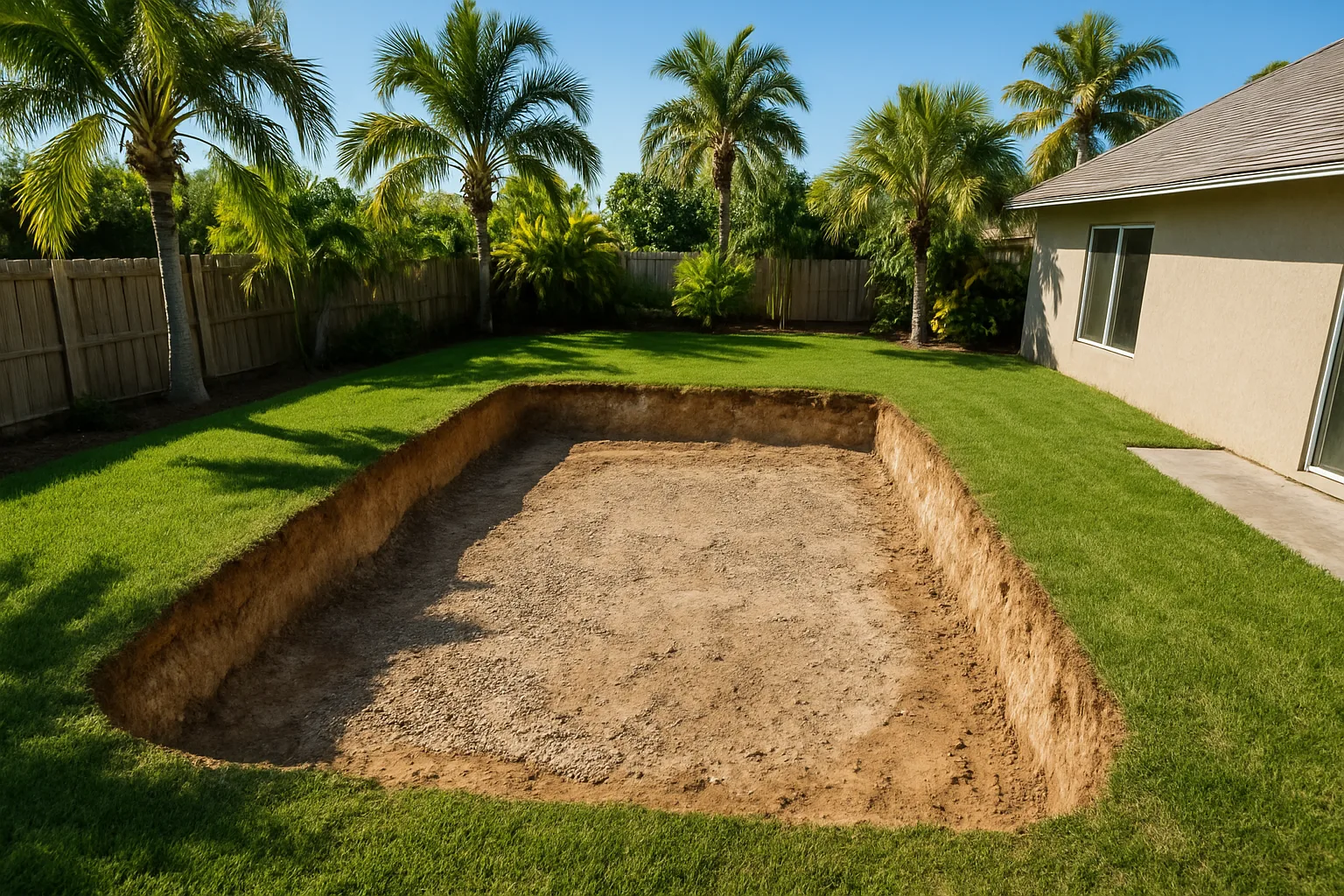
Partial Fill-In vs. Full Excavation
There are two methods for removing an in-ground pool in Florida: partial fill-in and full excavation. The choice affects cost, timeline, and what you can do with the land afterward.
Partial fill-in (also called pool abandonment) involves punching holes in the bottom of the pool shell for drainage, breaking the top 18 to 24 inches of the walls, and backfilling with clean rubble and compacted fill dirt. The remaining shell stays underground. This method costs $4,000 to $8,000 for a standard residential pool and takes two to three days.
Full excavation removes the entire pool structure — all concrete, rebar, plumbing, and decking. The hole is backfilled with engineered fill in compacted lifts and finished with topsoil and grading. This method costs $8,000 to $16,000 and takes four to five days. It is the right choice if you plan to build on the pool footprint or if you want no future settling issues.
How Do I Know Which Method Is Right for My Property?
The decision between partial and full removal depends on what you plan to do with the space afterward.
Choose partial fill-in if you want to restore the area as lawn or garden and have no plans to build a permanent structure on the pool footprint. Partial is faster, costs roughly half of full excavation, and passes county inspection when done correctly. The tradeoff is that the remaining shell creates a buried layer that can complicate future construction and may cause minor settling over time.
Choose full excavation if you plan to build an addition, garage, or any structure with a foundation over the former pool area. Full removal also makes sense if you want to eliminate any risk of future settling — some buyers and home inspectors specifically ask whether a pool was partially or fully removed. Full excavation provides a clean soil profile with no buried concrete.
For most Tampa Bay homeowners who simply want to reclaim yard space, partial fill-in is the practical choice. In our experience, roughly 70 percent of residential pool removals in Hillsborough County are partial fill-in and 30 percent are full excavation.
The Hillsborough County Permit Process
Hillsborough County requires a demolition permit for in-ground pool removal. The permit application requires a site plan showing the pool location relative to property lines and structures, and the proposed backfill method. Permit fees in 2026 range from $150 to $300 depending on the scope.
After backfill is complete, the county sends an inspector to verify proper compaction and drainage. The inspection is typically scheduled within five business days of completion. Failing inspection means additional compaction and re-inspection, which adds cost and time. This is why using engineered fill and proper compaction lifts matters — shortcuts on backfill are the most common reason for failed inspections.
A qualified pool removal contractor handles the entire permit process as part of the quoted price. If a contractor asks you to pull the permit yourself, that is a signal they may not be familiar with the local requirements.
What Happens to the Pool Equipment?
Pool removal includes disconnecting and removing all equipment: the pump, filter, heater, chlorinator, lights, and associated plumbing. Electrical lines to the pool equipment pad must be properly disconnected — this typically requires a licensed electrician to cap the circuit at the panel.
The pool deck (concrete, pavers, or travertine surrounding the pool) is usually removed as part of the project. Some homeowners choose to keep a portion of the deck as a patio, which is possible if the deck has its own footing separate from the pool structure. Discuss deck retention during the quoting process so it is included in the scope.
Gas lines to pool heaters must be properly capped by a licensed plumber. Water lines are typically capped at the nearest valve. All utility disconnections should be completed before demolition begins.
Cost Breakdown: Where Your Money Goes
Pool removal costs break down into five categories. Labor is the largest at 35 to 40 percent of the total — this covers the crew, equipment operators, and supervision. Equipment rental (excavator, skid steer, dump trucks) accounts for 20 to 25 percent. Disposal and hauling fees are 15 to 20 percent, varying by the amount of concrete and debris. Backfill material and delivery runs 10 to 15 percent. Permits, inspections, and utility disconnections make up the remaining 5 to 10 percent.
The single biggest variable is pool size. A small plunge pool (10 by 15 feet) at the low end versus a large freeform pool (20 by 40 feet) with attached spa at the high end can represent a three-to-one cost difference. Depth matters too — a pool that is eight feet at the deep end requires significantly more excavation and backfill than a four-foot uniform depth.
How Much Does Pool Maintenance Cost Compared to Removal?
Many homeowners considering pool removal are motivated by the ongoing cost of maintenance. Understanding the long-term math helps frame the removal investment.
Annual pool maintenance in the Tampa Bay area costs $2,400 to $4,800 for a standard residential pool. This includes weekly chemical treatment ($100 to $200 per month), electricity for the pump ($75 to $150 per month), quarterly equipment inspections ($100 to $200 per visit), and periodic resurfacing every 7 to 10 years ($5,000 to $15,000). Insurance premiums increase $200 to $500 per year for pool liability coverage.
A partial fill-in at $6,000 pays for itself in maintenance savings within two to three years. Full excavation at $12,000 pays for itself within three to five years. The homeowner also eliminates the liability risk, regains usable yard space, and removes a potential deterrent for buyers who do not want pool responsibility.
In the Tampa Bay resale market, pool removal typically recovers 50 to 100 percent of its cost at sale. Properties in family-oriented neighborhoods like FishHawk, Bloomingdale, and Riverview tend to see the strongest return because buyer pools skew toward families with young children who view pools as a safety concern rather than an amenity.
After Removal: What to Expect
After pool removal, the backfilled area will settle over the first six to twelve months. With properly compacted engineered fill, settling is minimal — typically one to two inches. With poorly compacted fill (the most common shortcut), settling can reach six inches or more, creating a visible depression in the yard.
Most homeowners sod or seed the filled area within 30 days of completion. The area can support foot traffic, landscaping, and light structures (pergolas, sheds) after proper settling. Building a permanent structure (addition, garage) on a partially filled pool site requires engineering review and potentially deeper foundation work.
Pool removal typically increases property value in the Tampa Bay market. Pools add maintenance cost and liability, and many buyers — especially families with young children — prefer a flat yard. The net return on pool removal investment ranges from 50 to 100 percent at resale, depending on the neighborhood and buyer demographics.
Need junk removal or demolition in Tampa Bay?
Get your price in 60 seconds — no phone call required.
Someone just booked
just now ★★★★★